By Sean Beckner-Carmitchel
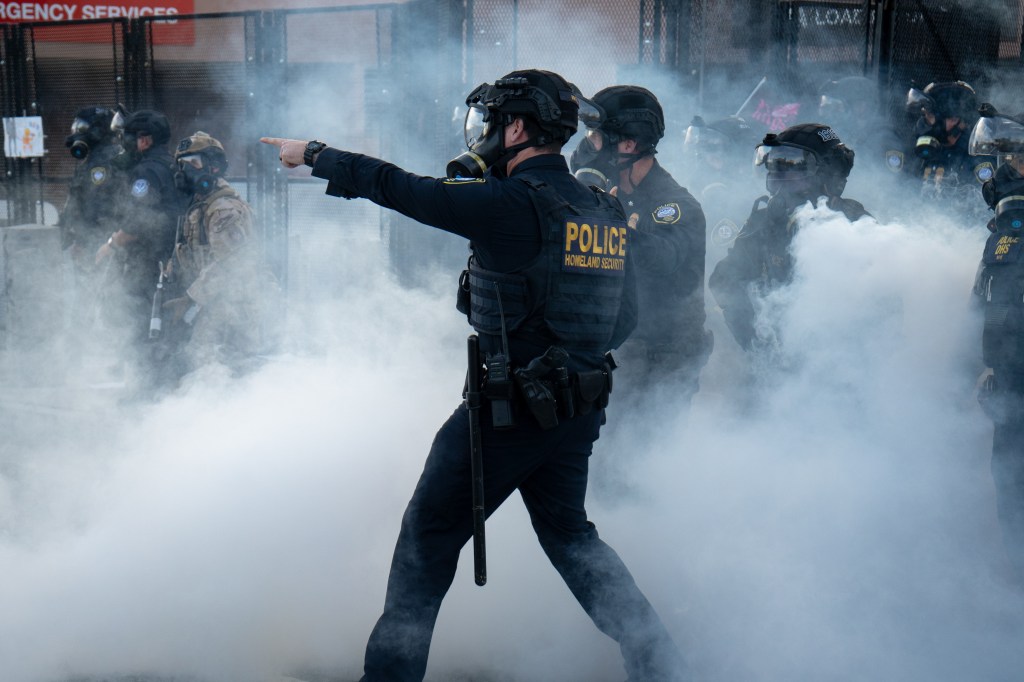
Law enforcement agencies allegedly misused crowd-control weapons at least 412 times during immigration enforcement protests across the United States between June 2025 and May 2026, according to a report released this month. The report, Charting the Crackdown, documented incidents across 16 US cities and concluded that officers used chemical irritants and other crowd control weapons.
Researchers for Charting the Crackdown identified 119 people with visible or self-reported injuries. Those people sustained 203 injuries associated with wounds like head trauma, blindness, fractures and lacerations. The report also notes that the actual number is likely higher; some injuries cannot be confirmed through only visual evidence.
Make a one-time donation
Make a monthly donation
Make a yearly donation
Choose an amount
Or enter a custom amount
Your contribution is appreciated. Your one-time contribution is appreciated. Donations are always welcome, there is no paywall.
Your contribution is appreciated. Your one-time contribution is appreciated. Donations are always welcome, there is no paywall.
Your contribution is appreciated. Your one-time contribution is appreciated. Donations are always welcome, there is no paywall.
“We documented over 100 cases of injuries caused when law enforcement agencies deployed crowd-control weapons in ways that violated manufacturer guidance, agency policies, widely accepted policing norms, or international use-of-force standards, raising serious concerns under constitutional and international human rights law,” Charting the Crackdown lead author medical advisor Rohini Haar, MD, MPH said in a statement attached to the report.
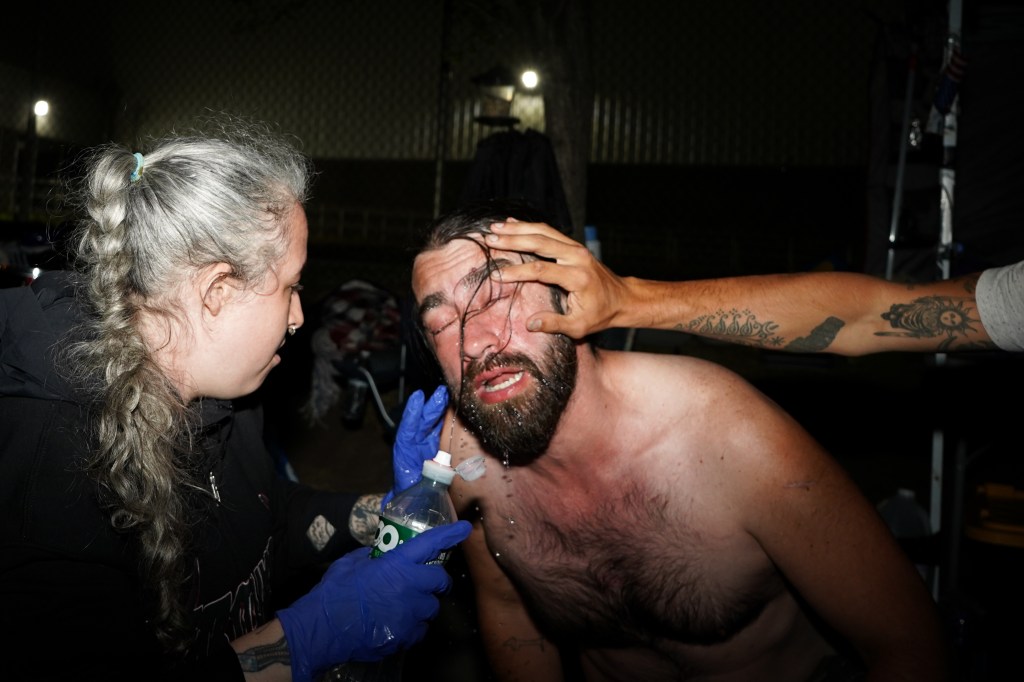
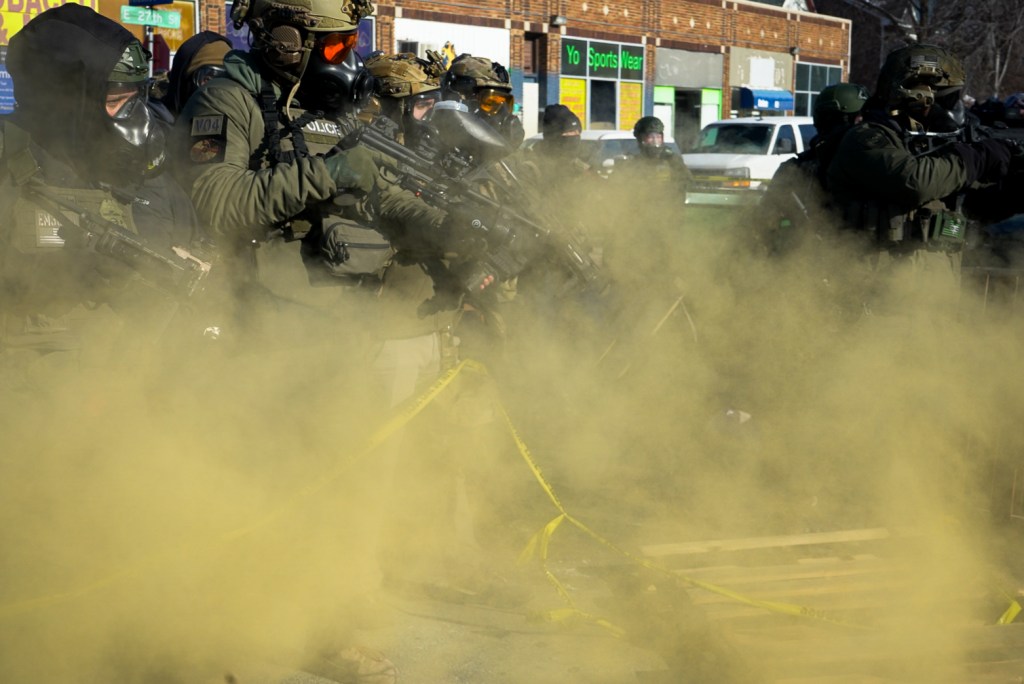
Researchers said they relied on open-source investigative methods for their study. There were repeated instances of officers firing kinetic impact projectiles at people’s heads, deploying chemical irritants in enclosed spaces, launching tear gas canisters directly at individuals and using crowd-control weapons against protesters. There were also incidents involving journalists, legal observers and medics.
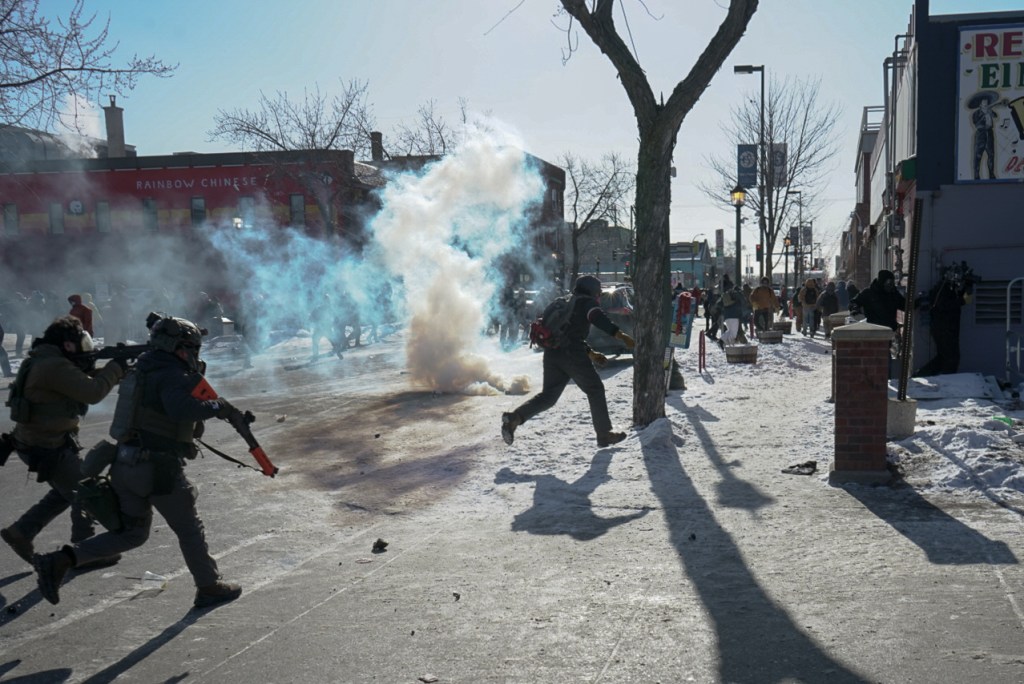
According to the report, more than 90% of the documented incidents occurred in five major city areas: Chicago, Los Angeles, Minneapolis, Newark, New Jersey, and Portland, Oregon.
Los Angeles
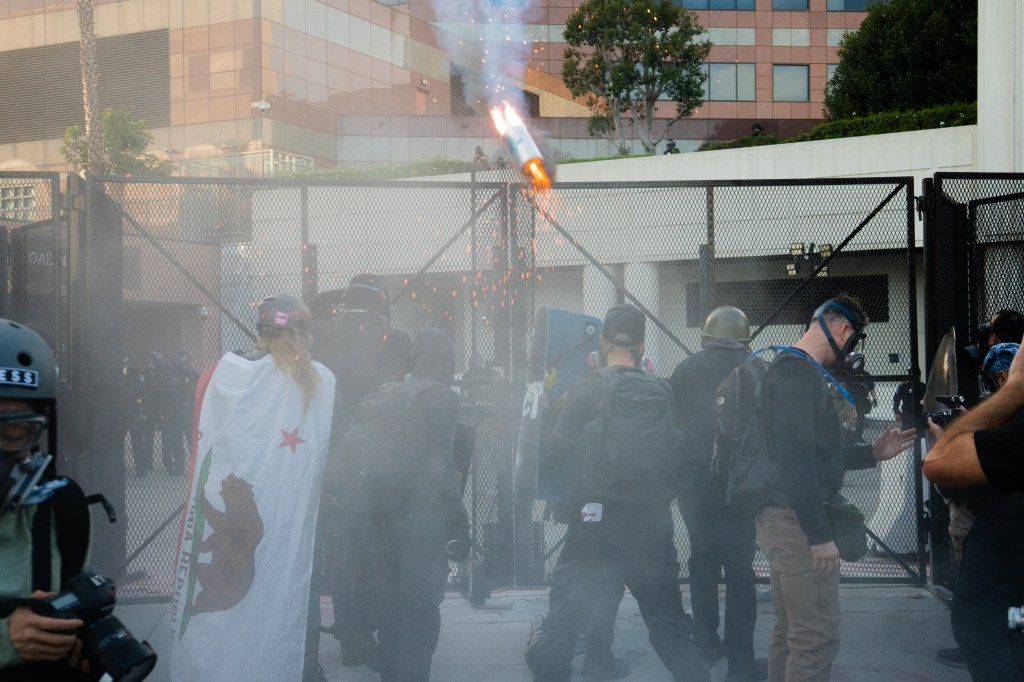
86% of the report’s documented incidents are attributed to the Department of Homeland Security and other federal agencies.
But in Los Angeles local law enforcement accounted for more than half of the reported cases. According to the report, Los Angeles’ state and local law enforcement were responsible for 56% of the incidents there while in Midway Blitz (Chicago, 91% DHS) and Metro Surge (Minneapolis, 76% DHS), DHS and other federal agencies were responsible for the majority of incidents.
Editor’s note: The author of this piece was also hit by “less lethal,” munitions by both federal and state law enforcement agencies during this period in several of the cities mentioned. He is a plaintiff in a lawsuit against the Department of Homeland Security as well as another against the Los Angeles Police Department alleging misuse of force.
Adam Rose, Deputy Director of Advocacy at Freedom of the Press Foundation, told Ten Four that “It shouldn’t surprise anyone that Los Angeles was the worst of the worst. Not only was LA the first testing ground for aggressive federal immigration enforcement, it also has a gruesome history of extreme violence by Los Angeles Police Department and the Los Angeles Sheriff’s Department against both protesters and press.”
Local law enforcement in Los Angeles has often seen allegations of misuse of force using “less lethal” munitions. There are dozens of ongoing lawsuits against the City and County of Los Angeles regarding claims of excessive force during protests.
Rose told Ten Four law enforcement in Los Angeles’s track record “dates back to at least 1970 with LASD’s killing of legendary journalist Ruben Salazar, followed by LAPD officers themselves rioting in 2000, 2007, 2011, 2020, 2021, and 2022.” Referring to the lawsuits, he said “these incidents have cost taxpayers millions in settlements, and yet individual officers face virtually zero consequences for brazen acts caught on video. Most local politicians here just stick their head in the sand, either controlled by the police unions or afraid to confront them on behalf of their constituents — who are left to bleed in the street or even get their eyeballs shot out of their head.”
The first incident documented for the report was on June 6, 2025. According to the report, “the initial wave of misuse occurred almost exclusively in Los Angeles,” during the countries’ first wave of surges in the city. Called “Operation ‘At Large,” Los Angeles accounts for 41% of documented instances.
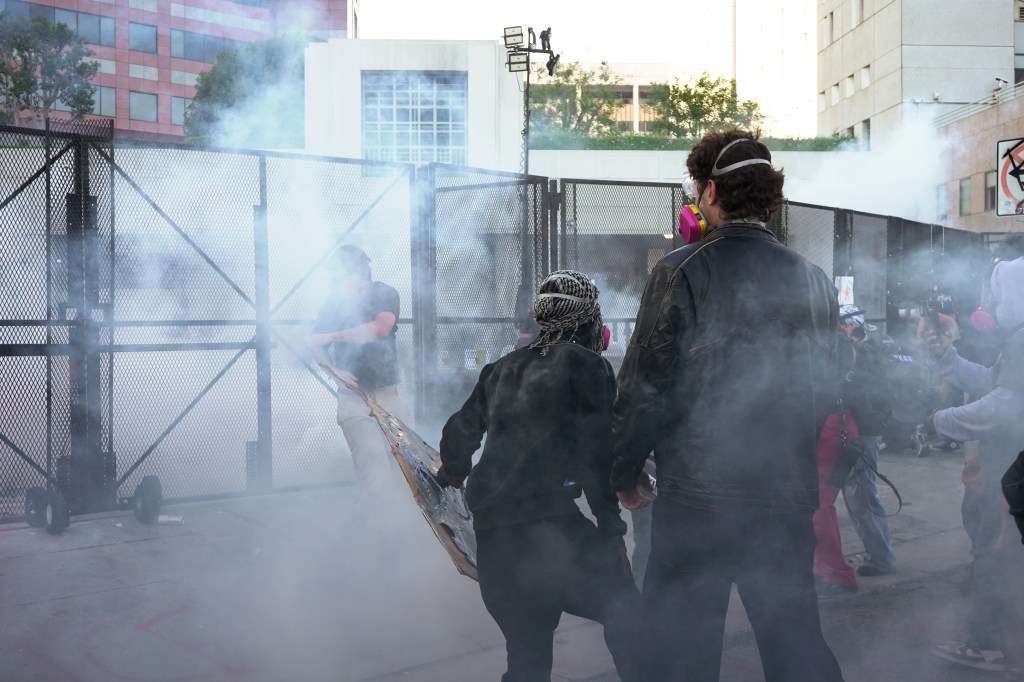
The Los Angeles Sheriff’s Department told Ten Four it had not yet fully reviewed the report and therefore could not comment on its specific findings.
“The Los Angeles County Sheriff’s Department has not yet had the opportunity to fully review the report or validate the data, methodology, or conclusions presented,” the department said in a statement. “As a result, we are not in a position to comment on its specific findings.”
The department said Los Angeles experienced “unprecedented federal immigration enforcement activity” that prompted some of the largest and most sustained demonstrations in the country. It added that, although local deputies were not responsible for federal immigration enforcement actions, they often became the focus of protesters’ frustration.
LASD said an “overwhelming majority” of demonstrators exercised their First Amendment rights peacefully and thanked those who protested responsibly. The department said its deputies receive extensive training emphasizing de-escalation, critical decision-making and its Respond, Observe, Assess and React (ROAR) principles. It added that less-lethal tools are intended to address specific threats to public safety—not peaceful protest activity—and that their use is governed by department policy, state law and constitutional standards.
The Los Angeles Police Department did not comment to inquiries on the report in time for publication.
The Los Angeles Board of Police Commissioners told Ten Four “as you are aware, both categorical and non-categorical uses of force involving Los Angeles police officers are subject to a rigorous process of investigation and review. All categorical uses of force are adjudicated by the Board of Police Commissioners and the Department presents a comprehensive report on both non-categorical and categorical uses of force annually to the Commission.”
The City of Los Angeles’ Mayor’s Office did not respond to inquiries regarding the report in time for publication.
Nick Stern, a photojournalist for around 30 years, has covered protest disaster investigation work around the world. He began covering protests in the US around 2020. Stern told Ten Four “I’ve suffered a number of injuries at the hands of law enforcement.” His first was significant bruising from a “less lethal” impact projectile.
“But way more serious than that,” Stern said, “was in June 2025.” I was shot in the leg with a device called a flash bang. These are essentially a big firework.” Stun munitions are intended to be shot over a crowd; they make a large booming sound with a bright flash. Stern continued, saying “one of these devices was shot directly at me. I was lucky it didn’t explode in my leg.”
The munition exploded just a few feet away, and embedded itself into Stern’s leg. He had emergency surgery the next day; they retrieved a plastic projectile case from the inside of the leg. Stern continued, saying “I spent four days in hospital two months of physical therapy. I’m still undergoing treatment for PTSD and some physical long-term effects.”
Make a one-time donation
Make a monthly donation
Make a yearly donation
Choose an amount
Or enter a custom amount
Your contribution is appreciated. Your one-time contribution is appreciated. Donations are always welcome, there is no paywall.
Your contribution is appreciated. Your one-time contribution is appreciated. Donations are always welcome, there is no paywall.
Your contribution is appreciated. Your one-time contribution is appreciated. Donations are always welcome, there is no paywall.
Across The Country
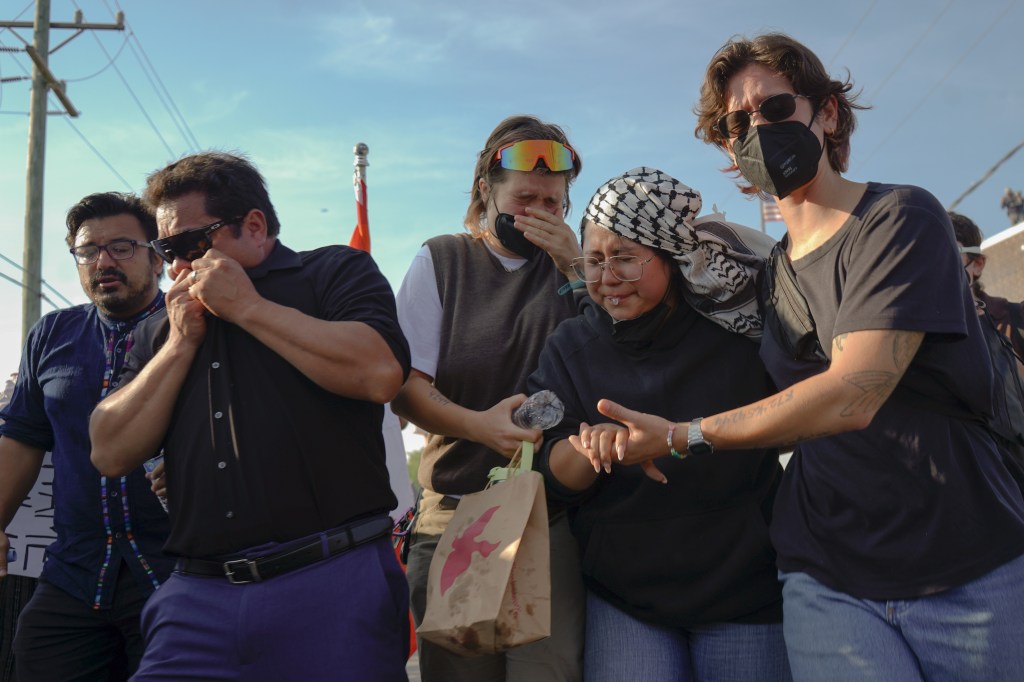
Afterwards, spikes follow in the Chicago area and Minneapolis.
Documented incidents rose sharply in cities where federal immigration enforcement operations expanded. Several spikes coincided with operations overseen by Border Patrol Commander-at-Large Greg Bovino. The report does not conclude directly that Bovino’s presence directly led to the alleged misuse.
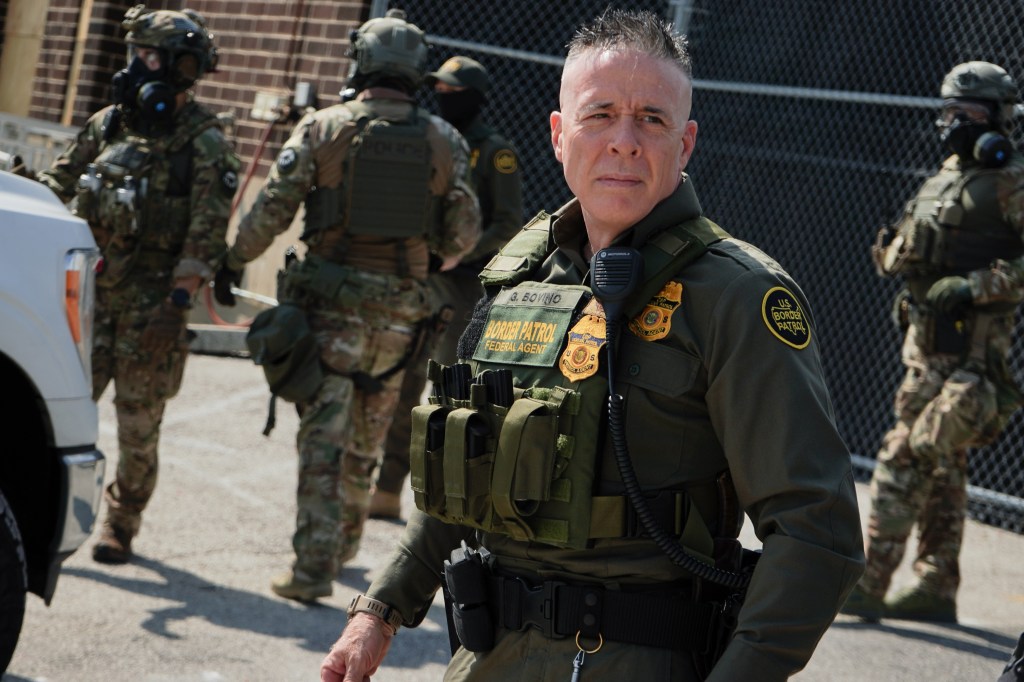
According to the report, 43% of those targeted by the alleged misuse were journalists. The first incident recorded for the report was a journalist struck with shrapnel from a flashbang grenade while filming a spontaneous protest against an immigration raid in the Garment District of downtown Los Angeles.
Ford Fischer is a Washington, DC based independent journalist and the Co-Founder and Editor In Chief of video outlet News2Share. He describes himself as a “primary source documentarian.” He often films situations related to political activism as a primary source, and licenses it to news organizations and documentaries.
In Broadview, Il while at a protest at the Broadview Detention Center, Fischer was hit by four “sting balls,” a chemical irritant packed “less lethal” munition. He told Ten Four that the response from federal and local police was “something I hadn’t really seen.”
He saw a woman attempting to block a driveway at the center spraying her with chemical irritant “point blank.” Then, Fischer said, a “Pastor approached and was shot by sting balls from the roof.”
Later that night, Fischer was also hit several times. Fischer said “I was hit by a barrage of them.” Fischer continued, saying “the impact of them can be pretty powerful, as can the chemical effect of it.” Fischer said he had to take four cold showers after being forced to eventually leave the protest that day due to lingering chemical effects from the irritant.
Olya, who goes by ScooterCaster, runs a boutique newswire agency that distributes footage to local national and online publications. Olya is a videojournalist, and mostly travels outside of New York State and occasionally abroad for coverage. She was hit by chemical irritant multiple times including in her ear at a protest, and a stun grenade hit and bloodied her hand at Delaney Hall in New Jersey.
Olya told Ten Four that police were clearing the streets on that day, and they were shooting projectiles into the crowd. “I was standing to the side. I was just holding my camera looking at the video I filmed, then suddenly a flashbang got shot right into my finger.” She said “I was just worried it was broken. But it was okay, the blood dried out and it stopped bleeding. So it was fine.”
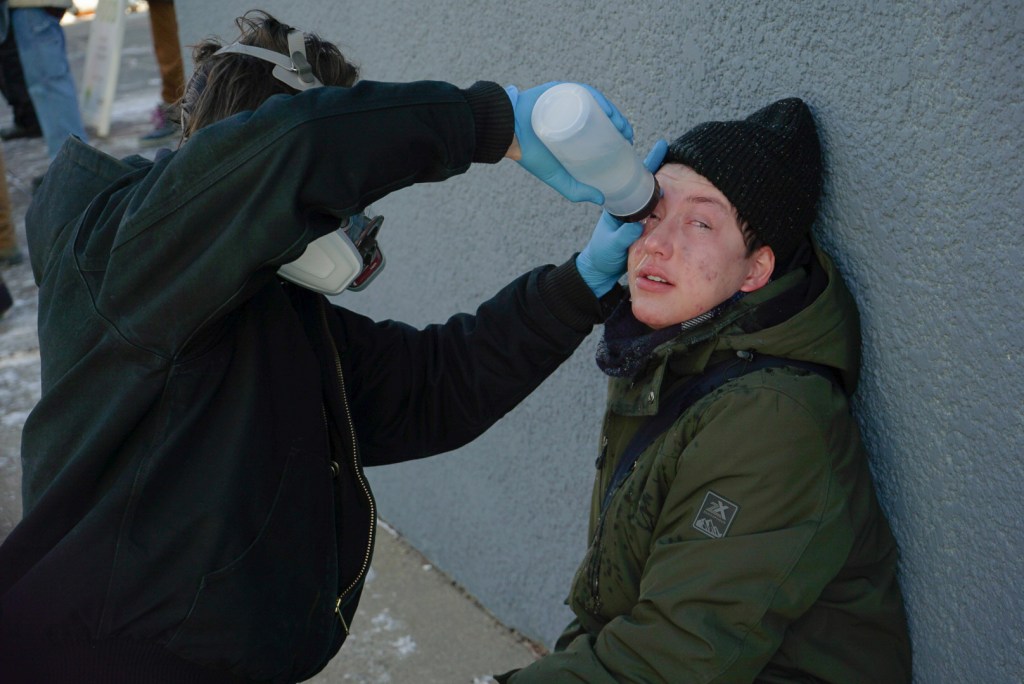
The chemical irritant sprayed onto her was sprayed “into my hair; into my ear.” Olya told Ten Four she had to “wash myself with a hose outside before I went home to see my kid. I was afraid to touch my kid.”
She also said that “I’m always considerate of the fact that we are in the crosshairs of clashes or confrontations. It happens, of course. I’m not one to complain. I’m here to film so yes some of it is going to hit me. But it was an unusually large amount that day.”
Rose told Ten Four that “organizations like the Human Rights Center are known for documenting atrocities overseas.” He followed, saying “comfortable Americans can try to tell themselves it only happens ‘over there’ or to ‘others,’” and ended his statement saying “but this report should be a wakeup call about the day-to-day horrors in our own local streets. The First Amendment doesn’t make us a bastion of free speech, it just makes these acts that much more shameful when our government routinely violates it.”
Make a one-time donation
Make a monthly donation
Make a yearly donation
Choose an amount
Or enter a custom amount
Your contribution is appreciated. Your one-time contribution is appreciated. Donations are always welcome, there is no paywall.
Your contribution is appreciated. Your one-time contribution is appreciated. Donations are always welcome, there is no paywall.
Your contribution is appreciated. Your one-time contribution is appreciated. Donations are always welcome, there is no paywall.


Leave a Reply