
By Sean Beckner-Carmitchel
Grieving Families Bonded To Pass A Bill Which May Require Drastic Changes To Police Killing Investigations
CALIFORNIA — A bill aiming to protect the rights of family members after a police officer’s use of force that results in serious injury or death has passed both houses of the California Legislature. It now heads to Governor Gavin Newsom for his signature. Several families of people killed by law enforcement wrote the bill alongside Assemblymember Ash Kalra (D-San Jose), and were heavily involved in its passing. The bill requires law enforcement officers and prosecutors to follow new procedures before formally interviewing the immediate family of those killed or seriously injured by police officers.
Make a one-time donation
Make a monthly donation
Make a yearly donation
Choose an amount
Or enter a custom amount
Your contribution is appreciated. Your one-time contribution to The Ten Four is appreciated. Donations are always welcome, there is no paywall.
Your one-time contribution to The Ten Four is appreciated. Donations are always welcome, there is no paywall.
Your one-time contribution to The Ten Four is appreciated. Donations are always welcome, there is no paywall.
DonateDonate monthlyDonate yearly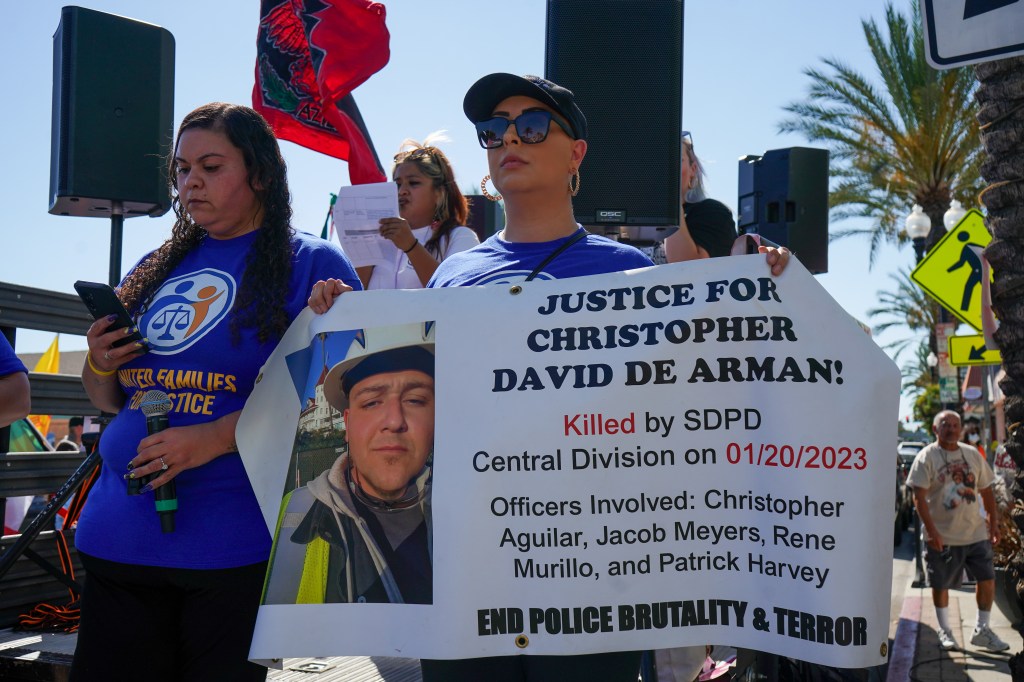
AB 572, a bill that would require a peace officer, prosecuting attorney, or an investigator for the prosecution, to clearly identify themself. It also requires them to show identification, and to inform the families of those killed or seriously injured of the status of their family member. The bill also requires prosecutors, officers and investigators to inform families that they can consult with an attorney or trusted person and that the investigation may involve the culpability of the family member who was killed or injured.
Supporters of the bill have said that it will prevent further documented cases in which families were contacted by law enforcement and recorded in secret, sometimes before even being told their loved one had died. They argue that the tactics are “coercive,” and “manipulative” in interviews, and the bill would reduce trauma and lead to a more fair investigation after police officers kill or seriously injure people.
A 2023 report by the Investigative Reporting Program at UC Berkeley’s Graduate School of Journalism and Los Angeles Times documented instances where “quickly question family members after a police killing in order to collect information that, among other things, is used to protect the involved officers and their department.” There had been at least 20 instances of the practice by 15 law enforcement agencies across the state since 2008, according to the piece.
The Ten Four has spoken to several of those who felt they spoke to police or investigators in circumstances they were not properly informed about their loved ones’ passing or that they were being interviewed in the first place. All of them supported the bill, and stated that they never wanted another family to have a similar experience.
David Sullivan
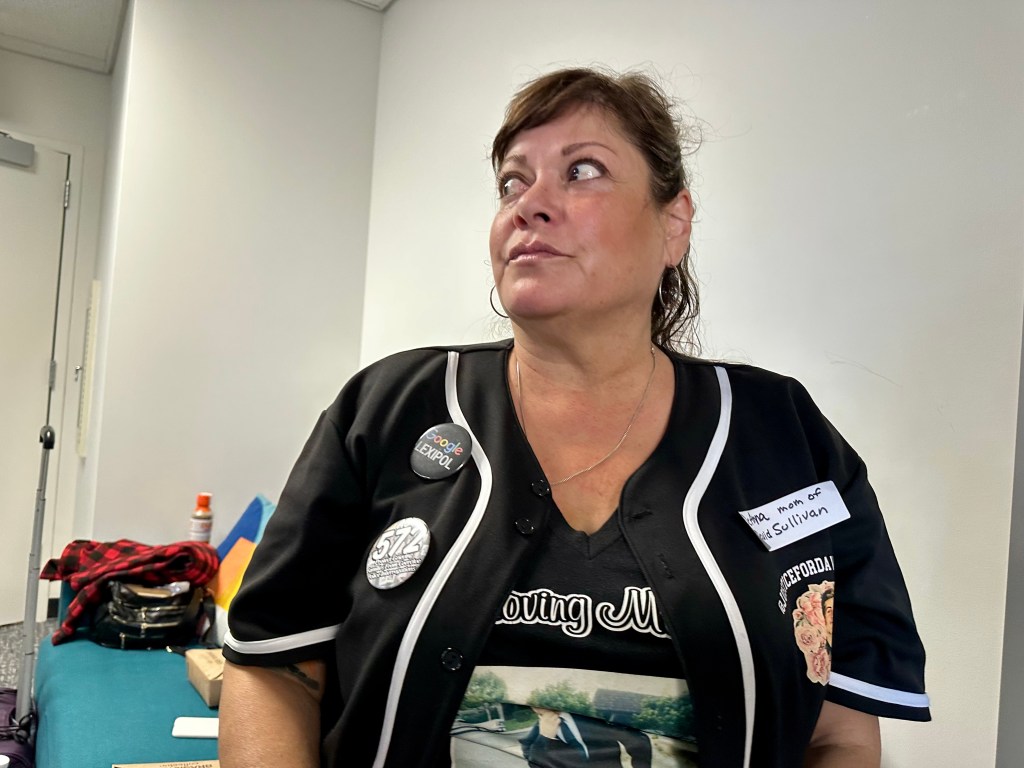
DeAnna Sullivan meets with other impacted families at Loyola-Marymount College in Los Angeles (Sean Beckner-Carmitchel)
Deanna Sullivan’s son David was shot and killed by officers at the Buena Park Police Department in 2019. She described the bill’s passing as “bittersweet,” because families “worked really hard on this bill and I think it pushed a lot of us to the breaking point.” DeAnna Sullivan said that part of working for the bill’s passing required “reliving stuff and going over stuff. We were asking other families to relive it and to go over it.” DeAnna Sullivan said that getting the bill passed included the loved ones of police shootings from across California.
DeAnna Sullivan mentioned Lexipol, a private policy provider which creates and sells police policy manuals for departments throughout the country. As of 2020, Lexipol services 8,100 agencies throughout the country. It was founded by officer turned defense attorney Bruce Praet, who was sued twice during his 11 years in policing. One of those was by the family of a kidnapping suspect Praet had shot.
On August 19, 2019, Buena Park Police Department Officers Jennifer Tran and Bobby Colon pulled David Sullivan over due to expired registration on the vehicle David Sullivan was driving. Officer Colon opened David Sullivan’s driver’s side door and demanded he exit the vehicle. David Sullivan started the vehicle, and Officer Colon grabbed David Sullivan’s arm. As he reversed the vehicle, hitting a patrol car, Colon drew his handgun and pointed it at David Sullivan.
The vehicle driven by David Sullivan continued moving and clipped another vehicle, then stopped. David Sullivan then exited the vehicle and began running. Colon fired. David Sullivan changed direction and Colon fired a second shot. David Sullivan then ran up a driveway as Colon shot his handgun at David Sullivan a third time. David then turned around and both officers fired twice. David Sullivan then dropped to his knees and laid down on his side.
Between the time Buena Park officers had approached the vehicle and the last shot, two and a half minutes had elapsed. After shooting David Sullivan seven times total, the officers radioed in for medical assistance while David Sullivan slowly rolled to his back. The officers then demanded David Sullivan roll back onto his stomach, but David Sullivan was unresponsive. As David Sullivan let out prolonged, pained cries, the officers handcuffed him.
As the officers stood over the body of David Sullivan, Officer Tran asked Officer Colon if “he had a chest seal or anything.” Colon replied that he didn’t. The officers wouldn’t give David Sullivan medical aid other than calling for paramedics as David bled profusely onto the ground. David Sullivan would later be pronounced dead at the scene; the medical examiner ruled that it was a shot which went through David Sullivan’s heart and lung that killed him.
Afterwards, the Sullivan family went to a District Attorney investigator. She says they went because “they said they were investigating the police who shot David, that they were going to help us.” Even then, DeAnna says “in my mind, they were gonna bring David out from the back room,” and tell her “it was a mistaken identity.” It was less than 12 hours after David Sullivan had been shot.
“When they hear the news,” that their family member had been shot, “you fall to the floor. It’s like your legs get out from under you.” Families are still in tremendous grief, and “you’re not physically in the right place, you’re not mentally in the right place, you’re not emotionally in the right place to be able to have a socalled interview, let alone an interrogation.”
A tape recording of questions of DeAnna by the District Attorney Investigator include questions about David Sullivan’s feelings about his weight, and the mental health of other family members.
At a May 2021 Buena Park City Council meeting, DeAnna tearfully said of the loss of her son, “He did not get to go to his brother’s wedding. He did not get to turn 20. He didn’t even get his driver’s license. He’s never gonna get married. He’s never gonna find the love of his life. He’s never going to give me grandkids. I’ll never see him again.”
A previous version of the bill saw previous efforts by the family. Sam Sullivan, David’s sibling, has spoken twice in favor of both bills.
Michael Barrera
Michael Barrera was at the Autumn Run Apartments in Woodland, California on February 8, 2017. Officers tased him numerous times, then piled on top of him during his arrest according to court documents leading to his asphyxiation according to court rulings.
After her brother’s death, Marissa Barrera began activist group Voices of Strength, which is an impacted family-led organization. They advocate for families impacted by police violence, and advocate for systemic change.
Officers claim they were responding to calls that Michael Barrera was “acting erratically.” They claim “he did not surrender when police approached.”
Barrera “vomited and became unconscious during the struggle and was later pronounced dead at the hospital,” according to a District Attorney report. The report does not mention how long officers were piled atop Barrera, nor how long he was exposed to stun guns. The district attorney’s review said one officer deployed his stun gun three times on Barrera; a test of the weapon recorded four “trigger events” during the time of the struggle that day.
“Michael was the one who wanted to do family stuff…” Marissa Barrera told The Ten Four. “He just was that kind of family man.” Marissa Barrera continued, saying he was “excited for his baby on the way. He never got to meet the baby.”
Marissa Barrera told The Ten Four before the bill was passed in the California Senate. She said that when she arrived at the hospital where her brother had been pronounced dead, she saw Sheriffs on the scene. Marissa Barrera said that the door her brother was in was being blocked by Yolo County Sheriffs. There, they began asking her questions. “He was asking my mom about Michael; if he was involved in gang activity, which my brother wasn’t. He started asking about tattoos…” According to the family, three different hospital workers attempted to let them see Michael Barrera in the hospital. They wouldn’t see his body for five more days.
“They used my mom answering questions about his tattoo to take away her right to see her son,” Marissa Barrera told The Ten Four.
“We have regular meetings, so we’re a tight knit group,” Marissa Barrera said of the families who worked to get the bill passed. She also mentioned Silicon Valley De-Bug as an organization which made the work to get the bill possible. “We’ve had multiple lobby days here in Sacramento where families from the Bay Area, from LA have came out with us,” as an effort to get the bill passed.
Christopher DeArman
Patricia DeArman and others rally at the Chicano Moratorium Anniversary in East Los Angeles (Sean Beckner-Carmitchel)
The family of 37-year-old Christopher DeArman says that the fatal shooting of DeArman following a traffic stop for a broken taillight was unjustified. On January 20, 2023 Christopher DeArman was headed home after visiting the Barrio Logan neighborhood of San Diego.
Christopher DeArman’s father, David DeArman, told The Ten Four that “he was surveilled for some time by the San Diego Police Department. Then ultimately he was murdered by San Diego Police officers who, rather than issuing a minor equipment malfunction,” detained him. According to DeArman they escalated the situation rather than de-escalate, and ultimately they murdered him.”
Officers arrived at Christopher DeArman’s vehicle with batons in hand. After continuing to question him for several minutes, DeArman started his vehicle. Officers sprayed him with a chemical irritant. Christopher DeArman drove several blocks away, then pulled over.
Christopher DeArman then left the truck and held his arms out. The DeArman family states that his hands were clearly separated, and he was following orders to show them. Officers unloaded 28 bullets toward DeArman, including several hollow point rounds not issued by the department. A K-9 was then deployed towards DeArman’s body, dragging him towards the item he had dropped.
David DeArman said “they held him still on the ground, a river of blood entailed on the street. And ultimately, he died.”
Patricia DeArman, Christopher’s sister, was on the phone with him during the initial stop. AB 572 is important, Particia said, because “if we hadn’t gone to his location, when would we have been notified?”
A few minutes after the family of Christopher DeArman arrived at the scene of his fatal shooting, a man approached the family wearing “regular clothes,” according to Patricia DeArman. He began to ask her and her daughter questions.
Patricia DeArman told The Ten Four that at no point did the man, who worked as a detective, tell the family the interview was being recorded. The man was “probing for these incriminating answers,” and asked if DeArman had drug issues, mental health issues, and continued to ask the family questions.
None of the DeArman family recall seeing a microphone. Muffling can be heard within the audio recording. All were listed as witnesses. Police had moved away other witnesses to the shooting away from the area, the family says.
David DeArman told The Ten Four that Christopher DeArman worked as a Decker, “not everybody can get on board a Navy ship. He did, and he was very proud of his contribution to the Navy.”
Patricia DeArman said that “Chris was a big teddy bear with a heart of gold and he was our sunshine.” She continued, saying he was born on Halloween and loved pranks. He was a loving uncle, and said that he’d play Barbie with his niece.
Working together to get the bill signed was “a bonding moment for all of us to come together,” according to Patricia DeArman. She continued, saying “we all come together with different stories and situations, but it seems the outcome is always the same.”
The Bill Passes
The bill passed the California Assembly on June 4 by a vote of 44-22 in favor. When it was amended and brought to the California Senate it passed on September 12, it passed 22-10 in favor.
Supporters say if it becomes law, the bill will respond to documented cases in which families were contacted by law enforcement before being told whether their loved one lived or died, often without full disclosure during moments of trauma. They argue AB 572 will reduce coercive tactics in interviews and reduce injustice when families are vulnerable.
The bill’s official supporters include a litany of criminal justice reform organizations, police abolitionist groups, and civil rights organizations. Among the are ACLU California Action, Asian Law Alliance, and California Alliance for Youth and Community Justice.
Official opposition to the bill includes associations which represent police throughout the state as well as the Los Angeles Sheriff’s Department and Los Angeles County District Attorney’s Office. An official statement from the California Peace Officers Association opposing the bill said that it would pose a “serious threat to the ability of law enforcement to carry out thorough and effective criminal investigations.” It argues that law enforcement relies “heavily on confidentiality in the initial stages of a case—whether it’s protecting sensitive intelligence, preserving the privacy of victims, or securing witness cooperation.”
DeAnna Sullivan says that the families were able to write the bill as it went through two iterations and eventually passed with modifications. Silicon Valley De-Bug and other organizations worked behind the scenes to make sure that if changes were made, the families approved.
If signed by Governor Gavin Newsom, AB 572 would take effect on January 1, 2027. Agencies would be expected to comply with the new requirements regarding how and when interviews are conducted by the beginning of the year.
In a statement attached to the bill while it was in committee, Assemblymember Kalra wrote that the “relatives of individuals affected by police violence have a reasonable expectation of transparency and information about the circumstances surrounding their loved ones’ welfare without encountering deceiving and threatening information. The coercive methods law enforcement officers use to interrogate family members of the victim not only inflict harm upon the victim and their family, but also erode trust in law enforcement.”
 LA Ten Four
Leave a comment